


SMART Estimator App
SMART Estimator Ltd
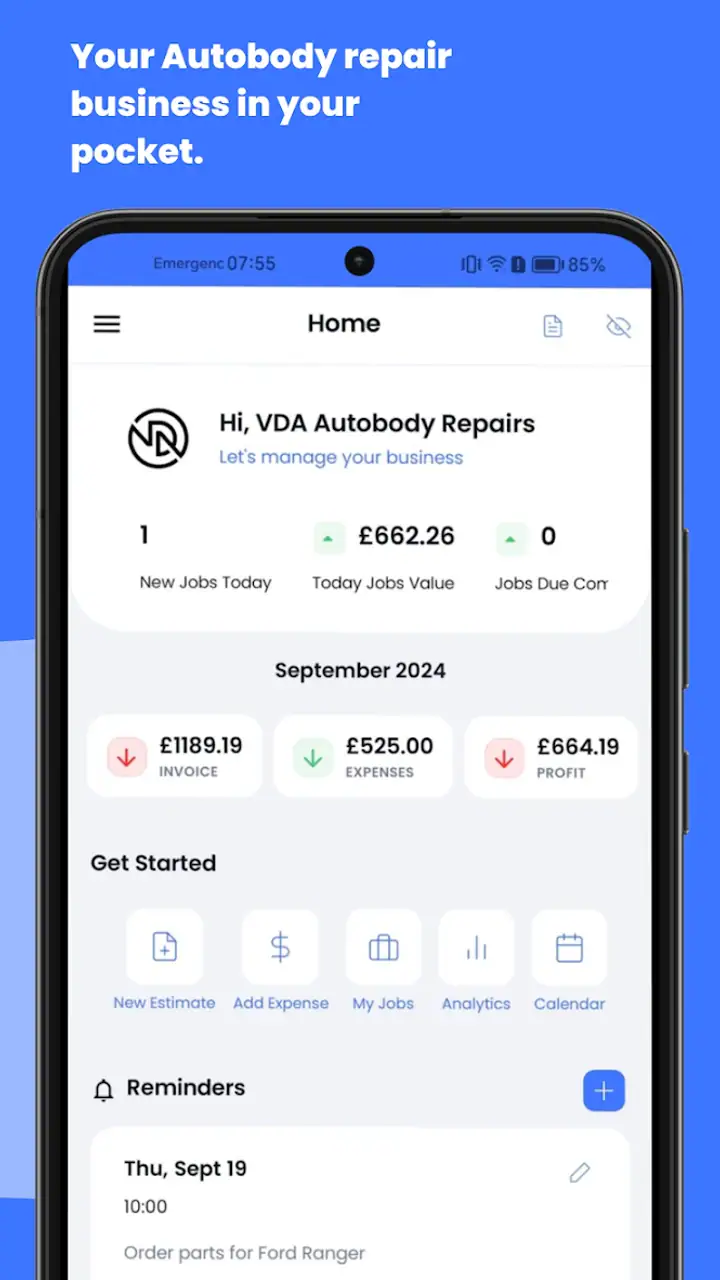
When I first looked at SMART Estimator, I understood its appeal immediately: it is an Android app aimed at autobody professionals who want to handle repair estimates, invoices, and day-to-day business work from one place. That sounds simple, but this kind of tool succeeds or fails on practical details. A repair estimator is only useful if it helps me move from a damaged vehicle to a clear, customer-ready figure without creating extra office work.
My overall impression is that SMART Estimator is best viewed as a focused workshop companion rather than a complete replacement for every system a larger body shop might already use. It can make sense for independent repairers, small garages, mobile technicians, and newer businesses that need a more organized process. It is free to install, carries an Everyone age rating, and comes from SMART Estimator Ltd. The app has attracted over ten thousand installs, while its average rating sits at 2.6 from roughly ninety ratings, so I would approach it with realistic expectations rather than assuming it will fit every workflow perfectly.
What the app feels like in real workshop use
The central idea is to bring estimating and invoicing closer to the place where the inspection happens. Instead of writing notes on paper, remembering prices later, and preparing an invoice separately, I can use a dedicated automotive tool as the working point for the job. That matters most when several vehicles are moving through a small operation and I need to keep each customer’s repair details separate.
The app belongs in the Auto & Vehicles category, but its value is more specific than a general vehicle utility. It is designed around the business side of autobody repair. That distinction is important. Someone looking for driving directions, fuel prices, maintenance reminders, or a vehicle scanner will not find this to be the right kind of app. Its audience is the person preparing, managing, or billing repair work.
I would also avoid treating the app as a magic source of repair truth. Estimating still depends on the technician’s inspection, the vehicle’s condition, the parts involved, and the agreement with the customer. The app can organize the estimate and the surrounding business process, but it does not remove the need for professional judgement. That is one of the first practical lessons for a new user: the quality of the result depends heavily on the information entered.
Related News

Why WhatsApp Messenger Still Makes Everyday Communication Feel Easy

Jurassic World: The Game Is the Better Dino Tycoon for Strategic Players

Threads in Real Life: Who Should Join, Lurk, or Leave

How SHEIN Turned Shopping Into an Endless Content Feed

How to Make Fortnite Feel Smarter on Mobile

Should You Switch to Microsoft Outlook on Mobile?
The current version is 4.9 and it requires Android 9 or later. That makes checking the phone or tablet’s operating system a sensible first step before planning a workshop rollout. On a compatible device, I would begin with a single real repair rather than attempting to migrate every open job at once. A small test gives me a chance to learn the app’s rhythm, identify any fields that do not match my shop’s terminology, and see whether the resulting paperwork is suitable for my customers.
Who will get the most from it
SMART Estimator is most attractive to a small repair business where one person may inspect vehicles, speak with customers, prepare estimates, and send invoices. In that setting, reducing repeated writing can be more valuable than having a long list of advanced options. It can also help a new operator establish a consistent routine from the beginning: record the job, build the estimate, review the amount, and turn the approved work into billing information.
A technician who spends much of the day away from a desk may also appreciate the mobile format. The useful question is not whether the app can replace a full office system, but whether it keeps enough of the job process close at hand to prevent details from being forgotten. For a small operation, that can mean fewer scraps of paper and fewer end-of-day corrections.
Gallery
I would be more cautious about recommending it as the only business platform for a large collision center. Larger teams usually need carefully controlled user roles, extensive reporting, integrations, scheduling, parts coordination, and established accounting connections. Those requirements can make a dedicated desktop or cloud management suite a better choice. SMART Estimator may still have a role in a smaller team, but the more complicated the organization becomes, the more important it is to test the entire workflow before committing.
Getting through the first setup without creating a mess
For a first-time user, the best setup strategy is deliberately boring. Install the app on a compatible Android device, open it when you have a few uninterrupted minutes, and prepare one sample or low-risk job. Do not begin during a rush when a customer is waiting and a vehicle is half inspected. Estimating software is easiest to judge when I can concentrate on how information is arranged rather than racing to finish.
Before entering anything, I would gather the details that normally appear on a repair document: the customer’s identifying information, the vehicle details, the visible damage, the work that may be required, and the prices I normally use. This preparation is not busywork. It exposes a common weakness in digital estimating: if the shop has no consistent way of describing labor, parts, or additional work, the application cannot create consistency by itself.
A useful approach is to separate confirmed work from possible work while inspecting the vehicle. For example, visible bumper damage may be certain, while a hidden mounting issue may need confirmation after removal. I would keep those distinctions clear in my notes and only place firm items into the customer-facing estimate when I am comfortable standing behind them. This avoids presenting a guess as a promise and makes later conversations easier.
The app includes in-app purchases priced from $14.99 to $39.99 per item. Because the installation itself is free, I would not assume that every useful business function is included without checking the purchase screen carefully. Before paying, I would identify exactly what the item unlocks and whether it matches the way my business works. A small shop should compare the cost with the time saved over several jobs, not judge it only by the initial price.
I would also decide in advance who is responsible for reviewing estimates before they reach customers. In a one-person business, that may simply be a final pause before sending or printing the document. In a small team, the person entering the estimate and the person approving the price may be different. Even without adding complicated procedures, this simple check can catch an incorrect labor line, a duplicated item, or an amount that does not match the conversation with the customer.
The first meaningful success: completing one repair estimate
The first successful action should be more than opening the app or creating a blank record. I would use one genuine, straightforward repair and aim to produce a complete estimate that I can read from the customer’s point of view. Start with the job identity, add the known repair work, review the totals, and then inspect the result before treating it as finished.
That final review is where the app becomes useful rather than merely digital. I would check whether the description explains the work in ordinary language, whether the amount reflects the intended scope, and whether anything that still needs inspection is clearly separated. A clean estimate should help the customer understand what is being proposed. If I have to explain every line because the wording is vague, the workflow needs improvement even if the arithmetic is correct.
Once the repair is approved, the next meaningful test is moving from estimating to invoicing. The benefit of having these tasks together is the possibility of avoiding duplicate entry. I would compare the invoice with the approved estimate line by line instead of assuming the transition is perfect. That comparison is especially important when the job changes during repair, because the final invoice may legitimately differ from the original estimate.
A realistic everyday scenario would be a small body shop receiving a customer with a damaged door and a scraped bumper. I would record the customer and vehicle, describe the visible work, prepare an estimate while the inspection is fresh, and discuss the scope before ordering or beginning anything. If additional damage appears later, I would update the job deliberately and explain the change rather than quietly altering the final amount. The app’s real value in this situation is not just speed; it is keeping the conversation, estimate, and invoice connected.
My practical tip is to treat the first completed job as a template for future habits. Notice which information was easy to enter and which details required extra thought. If the same clarification is needed on every repair, improve the wording or internal process rather than repeating the confusion. A mobile estimating tool pays off when it encourages a repeatable routine.
Where new users may become confused
The first area of confusion is the difference between an estimate and an invoice. An estimate describes proposed work and expected charges. An invoice represents the amount being billed after the work or agreed transaction. They may share information, but they are not interchangeable. I would keep checking which document I am preparing, particularly when a customer asks for a price before authorizing repairs.
A second issue is scope. Body damage often looks simpler from outside than it is underneath, and an estimate built from a quick visual inspection may need revision. That is not necessarily an app problem. It is a reason to use careful wording and to explain that the visible assessment may change once the vehicle is examined more fully. Clear communication protects the customer relationship better than pretending that every first estimate is final.
Another potential source of friction is the app’s fit with an existing office routine. If a shop already keeps customer records, accounting entries, and invoices in separate software, entering the same information again may reduce the advantage of a mobile estimator. In that situation, I would compare the time saved during inspection with the time spent reconciling records later. A specialized app is not automatically better than a familiar system that the team already uses accurately.
The rating of 2.6 is also worth considering before a business depends on the app for every job. A rating is not a complete technical diagnosis, but it does suggest that experiences have been mixed. I would test the functions that matter most to my shop, especially the estimate-to-invoice path, before purchasing optional items or moving historical work into the system. This is a sensible precaution, not a reason to dismiss the app immediately.
Privacy and operational discipline also matter even when the app feels simple. Customer and vehicle information should be handled carefully, and a shop should have a backup habit for important business records. I would not rely on a single phone as the only place where critical invoices exist. The app can be part of the workflow, but good recordkeeping still belongs to the business owner.
How it compares with ordinary alternatives
The most basic alternative is paper. Paper can be fast for a quick note, works without learning a new interface, and remains familiar to many technicians. Its weaknesses appear later: handwriting may be unclear, totals can be harder to audit, and turning an estimate into an invoice often means rewriting the same information. SMART Estimator has the advantage when the shop wants a more structured trail from inspection to billing.
A spreadsheet is another common option. It offers flexibility and can be tailored to a shop’s preferred columns, but it usually requires more manual design and discipline. A spreadsheet may calculate totals well while still leaving customer records, document presentation, and workflow decisions to the user. SMART Estimator is more purpose-built for autobody work, so it may feel more natural to someone who wants a ready-made repair context rather than a blank grid.
At the other end are full shop-management platforms. These are generally stronger choices for businesses that need broad administration, multiple staff members, detailed reporting, or links to other office systems. They can also be more expensive and demanding to configure. SMART Estimator’s appeal is its narrower focus and mobile accessibility, but that simplicity becomes a limitation when the business needs a complete management ecosystem.
The right comparison depends on the problem I am trying to solve. If the problem is scattered estimates and repeated invoice writing, this app is worth testing. If the problem is scheduling a large team, controlling a complex parts operation, or consolidating accounting across several locations, I would look beyond it. Choosing the smaller tool simply because it is free to install could create more work later.
Making the next step worthwhile
After completing the first estimate and invoice, I would spend time reviewing the process instead of immediately adding every job. Ask whether the customer details were easy to find, whether the repair description was understandable, and whether the final document matched the shop’s normal standards. I would also note how much time the app saved compared with my previous method. That personal comparison is more useful than relying on a general promise of efficiency.
If the workflow feels comfortable, the next step is to use it consistently for a limited group of repairs. Consistency reveals problems that a single test cannot, such as repeated data entry, unclear line descriptions, or difficulty handling revised work. It also shows whether the optional purchases provide enough value. I would only expand usage after the basic process feels dependable.
For a first-time user, my strongest advice is to keep the estimate honest, review every customer-facing document, and avoid treating the app as a substitute for inspection skill. The hidden advantage of a focused tool like this is the structure it can impose on a small business. The hidden trade-off is that structure only helps when the shop enters information carefully and maintains a sensible approval routine.
SMART Estimator is not an automatic recommendation for every repair business. The modest average rating, the possibility of paid additions, and the need to test its fit with existing records all deserve attention. Still, I can see a clear use case for an independent autobody professional who wants a mobile way to organize estimates and invoices without starting with a large management suite.
My final view is cautiously positive for that audience. I would install it for a controlled trial, complete one real repair from estimate through invoice, and judge it by the clarity and reliability of that complete journey. If it reduces duplicate work and keeps customer conversations aligned with the paperwork, it may earn a place in a small shop’s routine. If the business needs deep collaboration, broad integrations, or enterprise-level control, a more comprehensive alternative will likely be the better investment.
FAQs for SMART Estimator App
What is the SMART Estimator app used for?
SMART Estimator is designed to help users prepare and manage estimates in a more organized way. Depending on the available version and intended audience, it may support entering project details, adding labor or material costs, applying quantities and rates, and reviewing an estimated total before sharing it with a customer or colleague. It is especially useful for professionals who want a more convenient alternative to handwritten calculations or basic spreadsheets.
Is SMART Estimator suitable for beginners?
The app can be useful for beginners, although the overall experience depends on how familiar you are with estimating work, prices, quantities, and project terminology. Its main advantage is having estimate-related information in one place, but users still need to enter accurate data and understand what each field represents. Before relying on it professionally, it is worth creating a sample estimate and checking that the totals and settings match your usual workflow.
Does SMART Estimator work offline, or does it require an internet connection?
Offline availability can vary according to the app version, account features, and the specific functions you are using. Basic data entry or previously loaded information may work without a constant connection, while synchronization, cloud storage, account access, updates, or sharing features may require internet access. If you plan to use SMART Estimator at job sites or in areas with weak coverage, test the essential tools offline before depending on the app.
Can estimates created in SMART Estimator be saved, shared, or exported?
SMART Estimator may provide options for saving estimates and sharing them with customers, coworkers, or other applications, but the exact formats and sharing methods can depend on the current release and subscription or account configuration. Users should review the available export, email, print, and cloud options after installation. It is also sensible to keep a backup of important estimates, particularly before changing devices or reinstalling the application.
Is SMART Estimator free to download and use?
The download price and available features may differ between Android and iOS, and some versions can include optional purchases, subscriptions, or limitations on advanced tools. Installing the app does not always mean that every function is free. Before starting a real project, check the store listing for current pricing, trial conditions, account requirements, and renewal details. This helps avoid unexpected charges and clarifies which estimating features are available without payment.
Pros
- Quickly estimates materials and project costs on the go.
- Simple interface suitable for beginners and occasional users.
- Useful for comparing different project or pricing scenarios.
- Helps reduce manual calculations and potential arithmetic errors.
- Convenient mobile access without needing a desktop calculator.
Cons
- Estimate accuracy depends on the quality of your entered data.
- May lack advanced tools for complex professional projects.
- Some features or content may require an internet connection.
- Pricing information may need regular updates to stay reliable.
- Small screens can make detailed entries less convenient.


